

Problem
What needed to be clarified
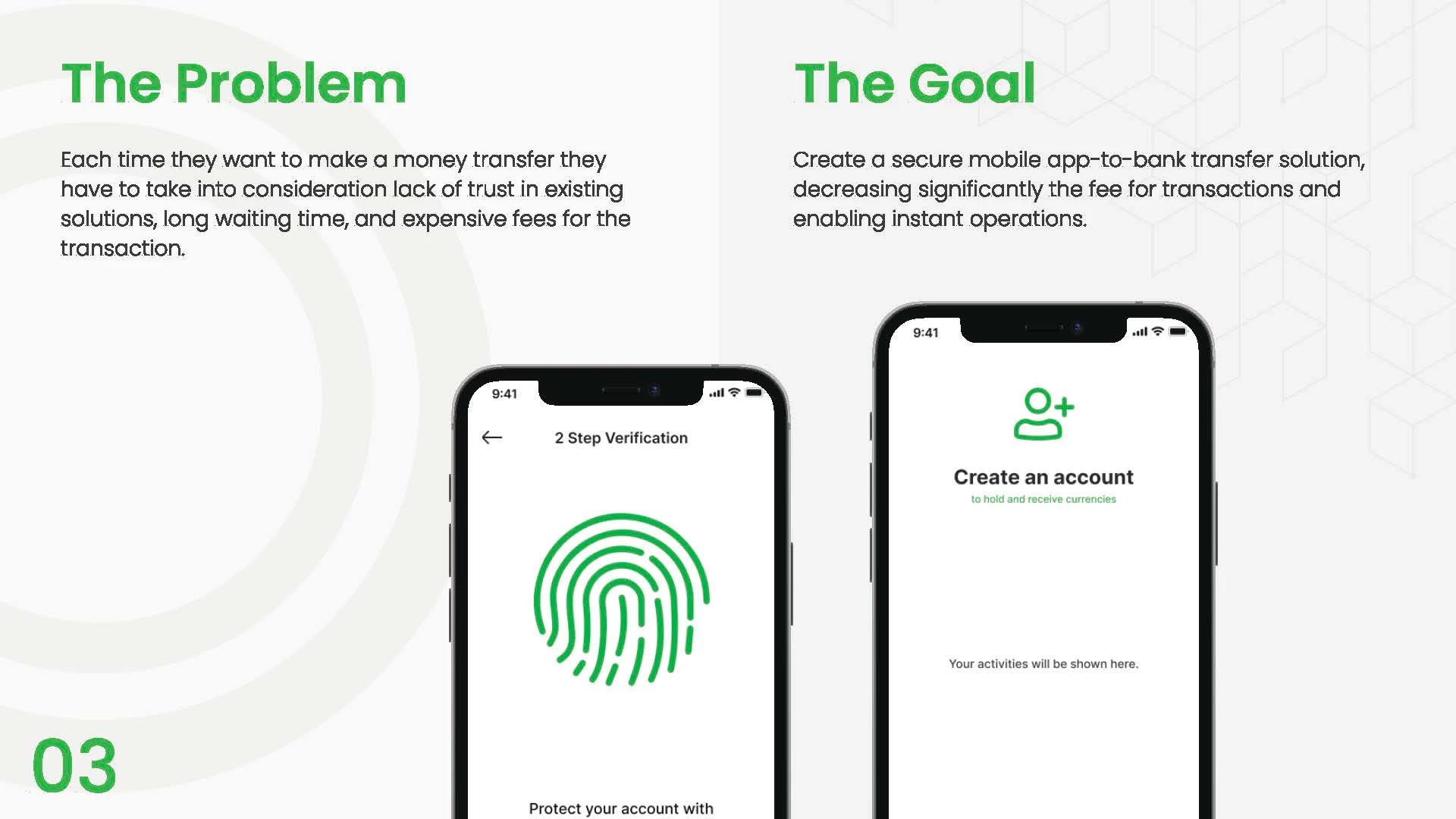
The project source identifies three concerns with existing transfer experiences: trust, waiting time and fees.
Users need to understand what they will pay, what the recipient will receive, when the transfer is expected to arrive and how the transaction is confirmed before they commit.
Users and context
Who the product had to support
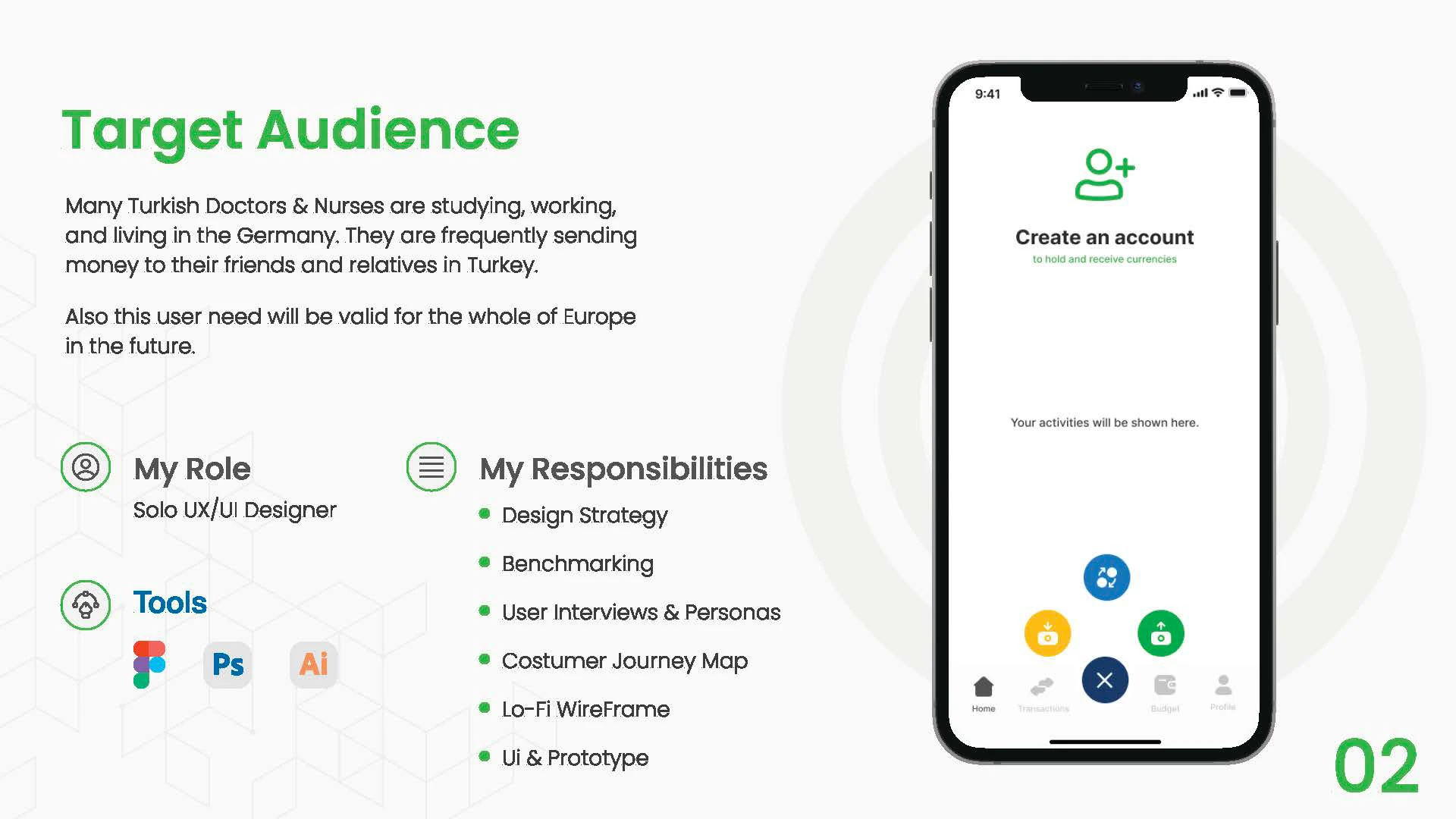
The initial target audience described in the source was Turkish doctors and nurses studying, working or living in Germany who send money to friends or relatives in Turkey.
The source suggests possible future relevance across Europe, but the case study does not present that as a validated market result.
Constraints
Limits kept visible
- Financial information must be clear enough to support trust.
- Fees, exchange values and arrival expectations are connected decisions.
- Registration, payment and verification need to feel like one coherent journey.
- Regulatory and compliance review is not documented.
- The source describes the work as ongoing and contains no launch evidence.
Process
How the work moved forward
Frame the trust problem
The sprint started from user concerns around trust, waiting time and fees, then translated those concerns into information that needed to be visible before transaction commitment.
Move from research themes to flow
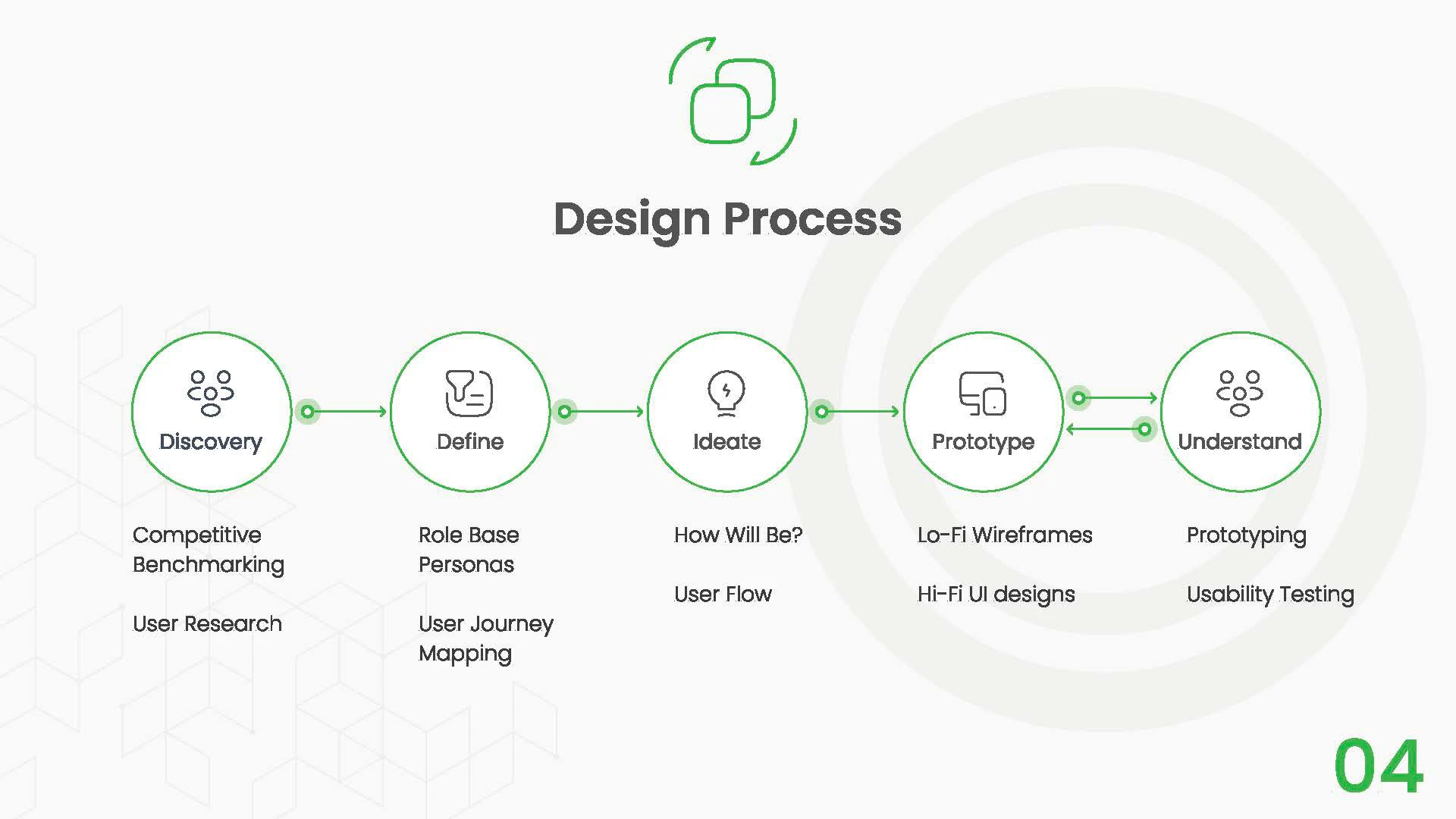
The source presents benchmarking, interviews, personas and a customer journey as inputs for low-fidelity wireframes and high-fidelity UI.
Prototype the transaction path
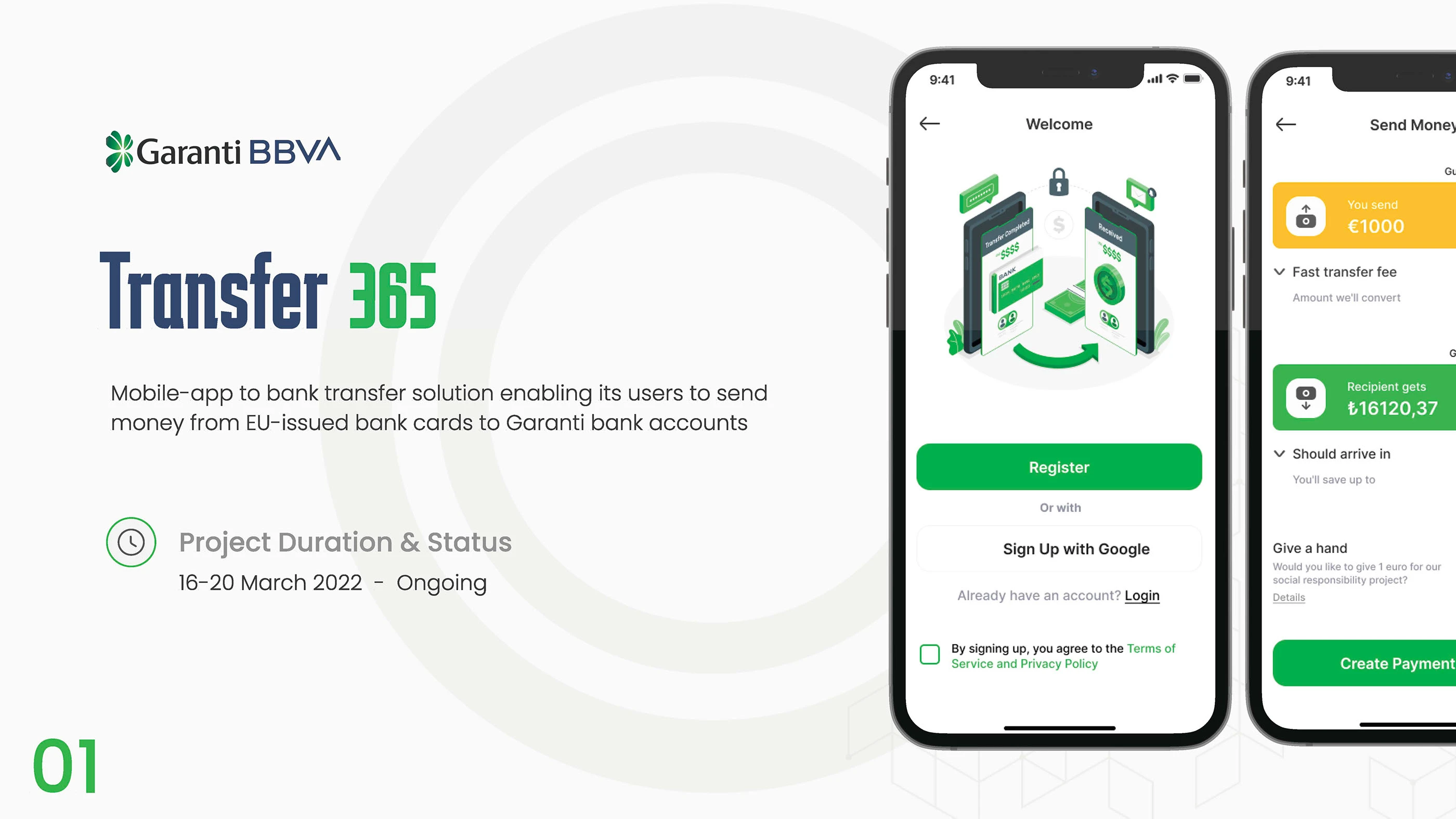
The work produced an interactive prototype covering registration, transfer value, payment creation and confirmation states.
Evidence
Evidence and inputs
The source presents a one-week solo UX/UI sprint covering strategy, benchmarking, interviews, personas, journey mapping, wireframes, high-fidelity UI and an interactive prototype.
It does not state interview counts, persona evidence, completed usability test results, financial compliance review or a formal institutional relationship.
- Project period shown in the source: 16-20 March 2022.
- The source described the concept as ongoing at the time of publication.
Design decisions
Choices that shaped the interface
Show sender and recipient values together
You-send and recipient-gets information are presented in the same context, supported by fee and exchange-rate information.
Communicate timing and progress
Arrival expectations and a step-by-step payment flow reduce uncertainty about what happens after each action.
Make security visible within the journey
Registration, payment creation and two-step verification are presented as connected stages instead of placing security only at the end.
Keep optional actions outside the critical path
An optional social-responsibility donation step does not block the main transfer journey.
Outcome
What the work produced
The sprint produced a product direction, journey structure, wireframes, high-fidelity screens and a prototype for further validation.
No verified launch, conversion, transaction-time or fee-reduction results are documented.
Learning and next steps
What the next pass should test
Trust in a financial flow depends on the clarity of values, timing and confirmation, not only on visual reassurance.
- Validate fee comprehension and task confidence.
- Measure task completion only after a formal test is documented.
- Include financial-regulation and accessibility review with appropriate specialists.