

AI-first product design
Designing the system around the designer.
I have been experimenting with a product design workflow where meetings, business requirements, Jira, Figma, code and AI agents are not isolated tools anymore. They become parts of the same design system.
Human-driven. AI-connected.
01 / In production
From meeting notes to developer-ready design.
This is the workflow I have already been applying in a real enterprise product environment. The tools stay connected so context can follow the work.
Keeps discovery conversations available as structured input for the next design decision.
Makes acceptance criteria and delivery constraints explicit before exploration starts.
Connects the brief to the source story so requirements do not drift between tools.
Helps turn connected product context into drafts, alternatives and implementation notes.
Provides the canvas for flows, prototypes and decisions grounded in existing patterns.
Makes components and variables available to the connected workflow without inventing a parallel UI language.
Carries approved design intent closer to the codebase and its real constraints.
Keeps the final handoff connected to the implementation work the team can review and ship.
How it works
A continuous design loop,with a human decision point.
- 01CaptureMeeting context
- 02StructureDesign brief
- 03DesignSystem patterns
- 04ReviewHuman decision
- 05ShipFeedback loop
Capture the context
Meetings and discussions are captured through Fellow and existing product documentation. Relevant business context becomes structured product information instead of disappearing inside meeting notes.
Turn context into a Design Brief
The Jira story and meeting context become a structured
Design Brief.mdwith the problem, requirements, constraints, edge cases, existing patterns and acceptance criteria.Design inside the existing system
Claude Code can access Figma through the Figma MCP server. The agent works with the product’s existing components and interaction language rather than inventing an unrelated UI.
Human in the Loop
AI never represents the final design authority. I review product logic, usability, interaction, hierarchy, accessibility, visual quality, edge cases and feasibility.
Automation accelerates execution. Judgment still belongs to the designer.
Close the loop with development
After approval, the same context can continue into Cursor, Claude Code and GitHub. Jira can carry the final design reference and relevant implementation context.
In parts of my own workflow, this approach has reduced the time required to move from product context to usable high-fidelity design by up to roughly four times.
Let’s talk01
Context stays connected
Business decisions, meeting notes, Jira requirements and design context do not need to be reconstructed at every stage.
02
Design systems become executable
Components are not only documentation. Agents can reason with the existing system and use it during creation.
03
Faster iteration, not less thinking
Routine transitions become faster while review, validation and product judgment remain human responsibilities.
04
Better developer handoff
The context that produced the design can also explain how it should behave and relate to the product architecture.
02 / In development
RAG Pipeline for UX/UI Design Agents
From Design System to Design Brain.
I am currently experimenting with the next version of this workflow: a local AI environment built around the organization’s own design knowledge. This is an experimental system under development, not a production claim.
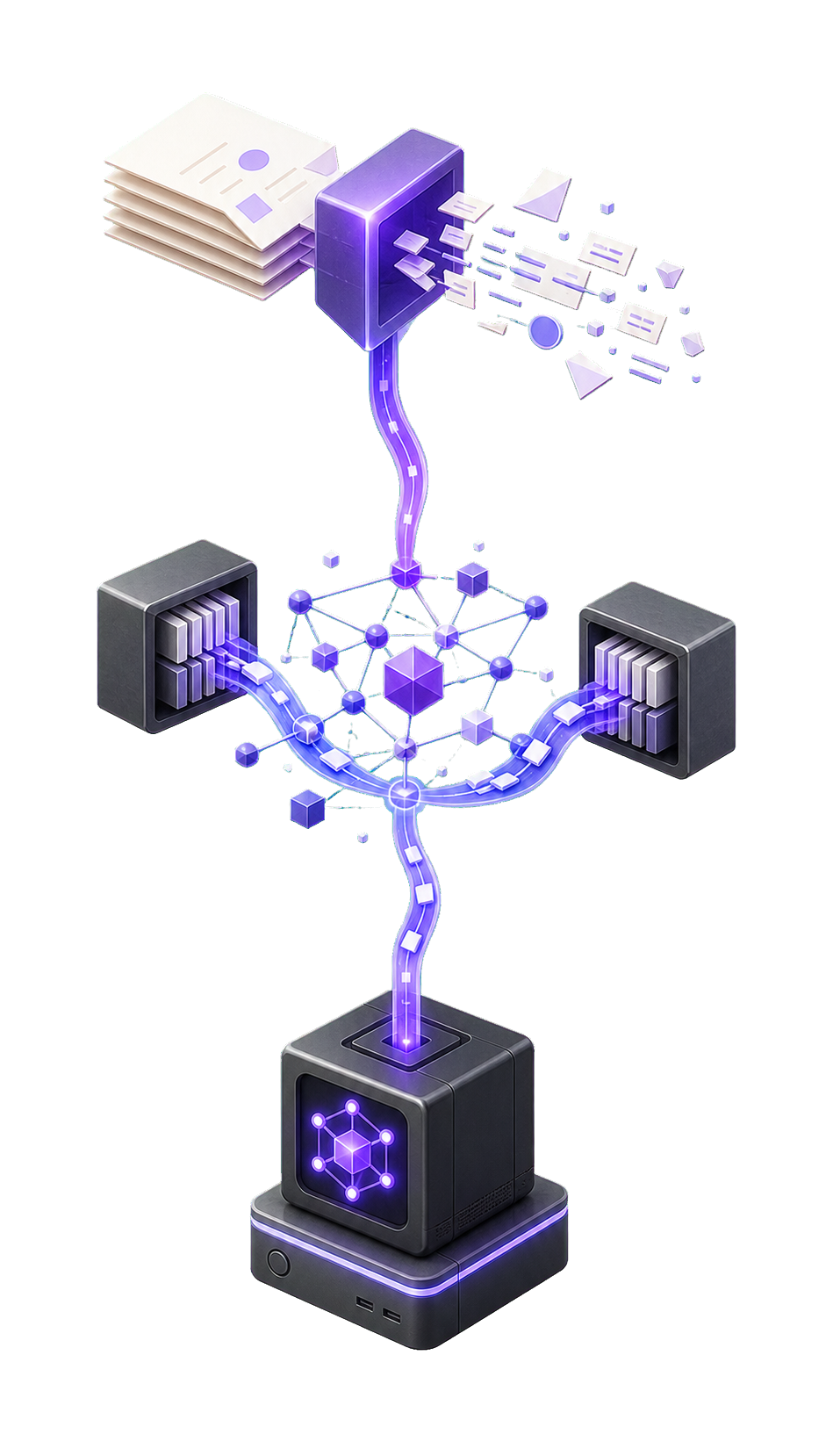
The architecture
Company knowledge → retrieval layer → local models → specialist agents → tools → human review.
Lower external credit dependencyFrequent internal iteration can happen without every operation consuming an external API credit.
Company-controlled knowledgeProduct and design context can remain inside company-controlled infrastructure, depending on implementation.
Better groundingRetrieved company context can reduce unsupported outputs and improve relevance. It does not eliminate hallucination.
Persistent design memoryPast decisions, patterns and product knowledge can become searchable and reusable.
Design intelligence
A Design System tells you what exists.
A Design Brain could also remember why.
A traditional Design System stores components, tokens and rules. A Design Brain could connect those artifacts with the decisions behind them.
- Why was this interaction chosen?
- What did users struggle with before?
- Which pattern already solved a similar problem?
- What constraints did engineering discover?
- What did the team reject — and why?
This is where I believe RAG becomes especially interesting for product design.
An observation
The creative workstation is changing.
For AI-assisted design teams, powerful local machines or shared local compute clusters could become a new type of creative workstation: running models close to the company’s knowledge, design system and product data.
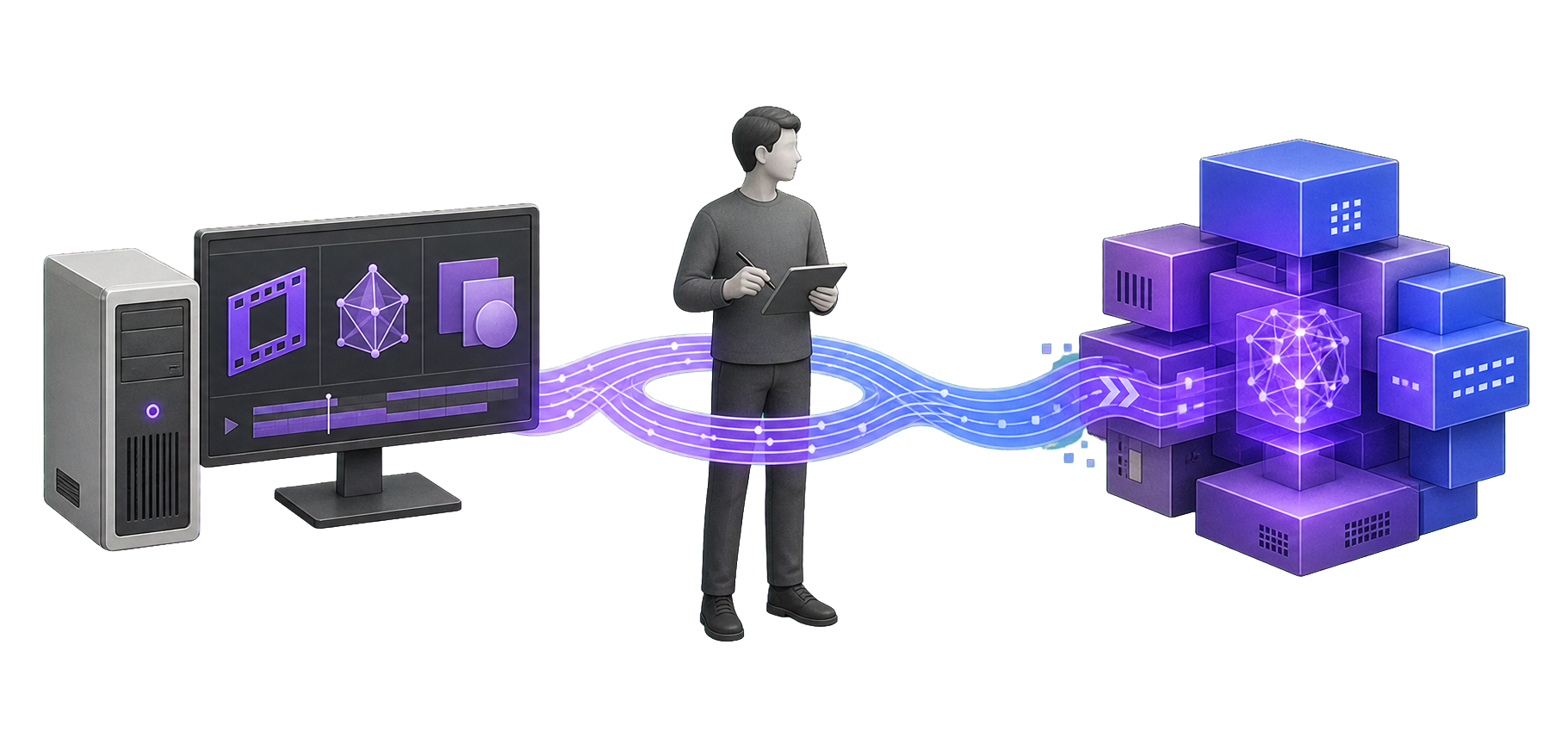
Video editors, 3D artists and graphic designers were traditionally given powerful workstations because creative work needed assets, applications and computing power close to the person doing the work. AI changes the tool — but not necessarily the principle.
Cloud / local
Both approaches have value.
The architectural idea is potentially hybrid, not a verdict that local is always better.
Best for frontier capability.
- Quick experimentation
- General reasoning
- Low infrastructure overhead
Trade-offs: usage-based costs, repeated context transfer and external infrastructure dependency.
Interesting for owned context.
- Frequent internal workflows
- Proprietary design knowledge
- Controlled environments
Trade-offs: hardware investment, setup complexity, model maintenance and potentially weaker models than frontier cloud systems.
The direction I find most interesting
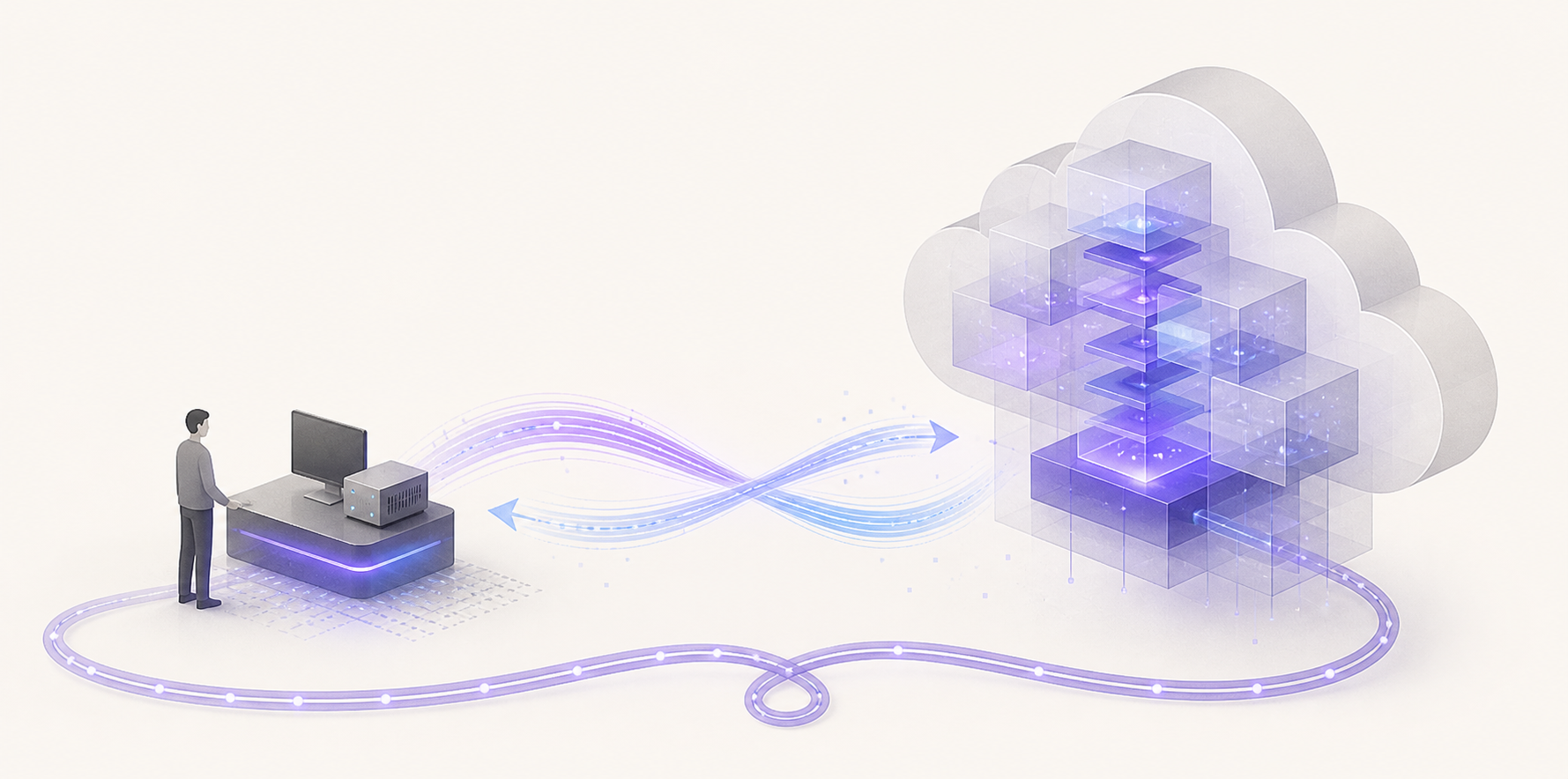
The future is probably hybrid.
I do not believe every design task needs a local model. Frontier cloud models will continue to be extremely valuable. But high-frequency, company-specific work may increasingly move closer to the organization’s own infrastructure.
A local Design Brain could handle persistent context and routine iteration. Frontier models could be called when deeper reasoning or more advanced capabilities are needed.
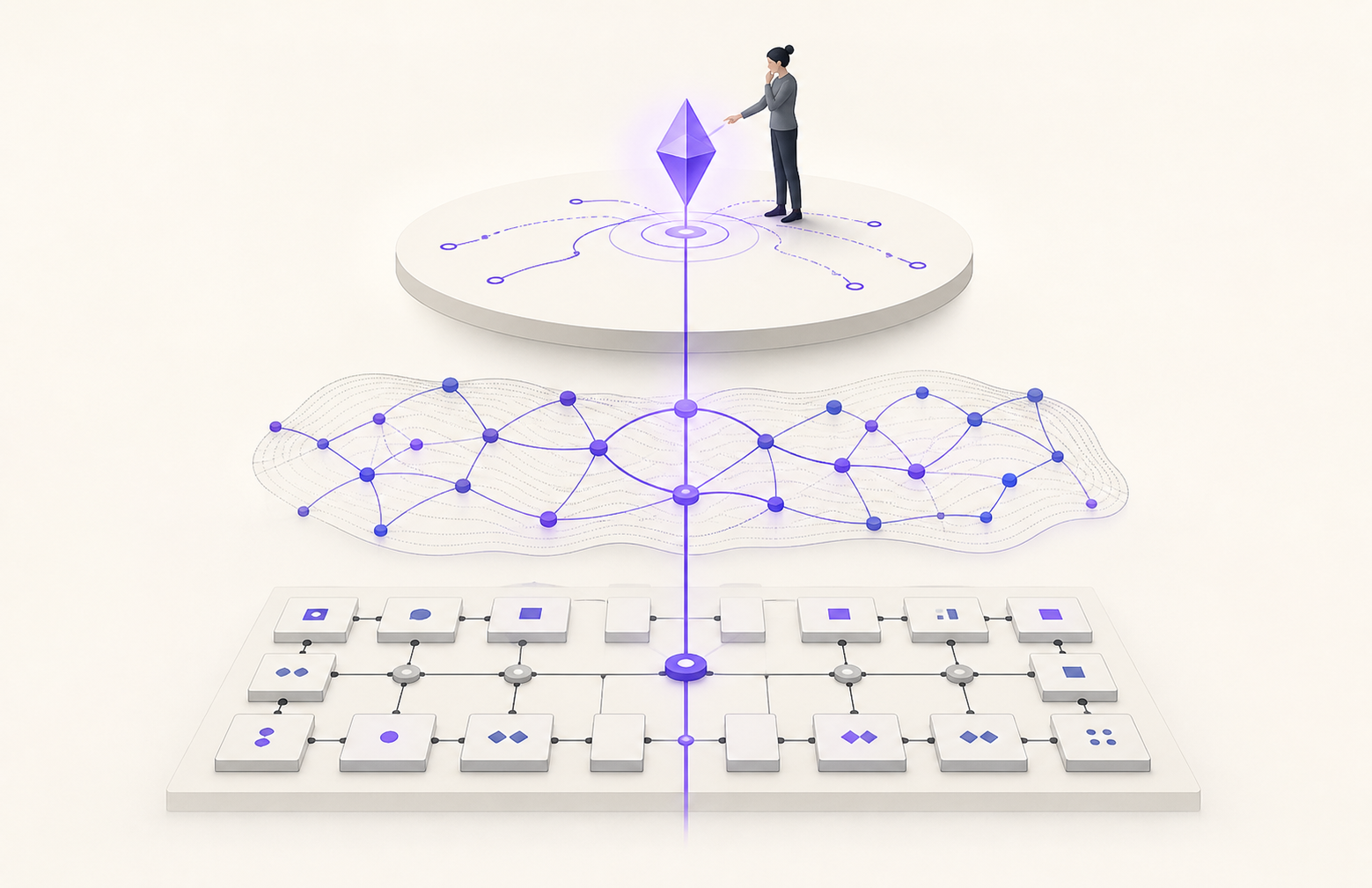
A working direction
From Design System to Design Intelligence.
The goal is not to generate more screens. It is to build an environment where business context, user knowledge, design decisions and implementation constraints stay connected throughout the product lifecycle.
AI accelerates the loop.
The designer still owns the decision.